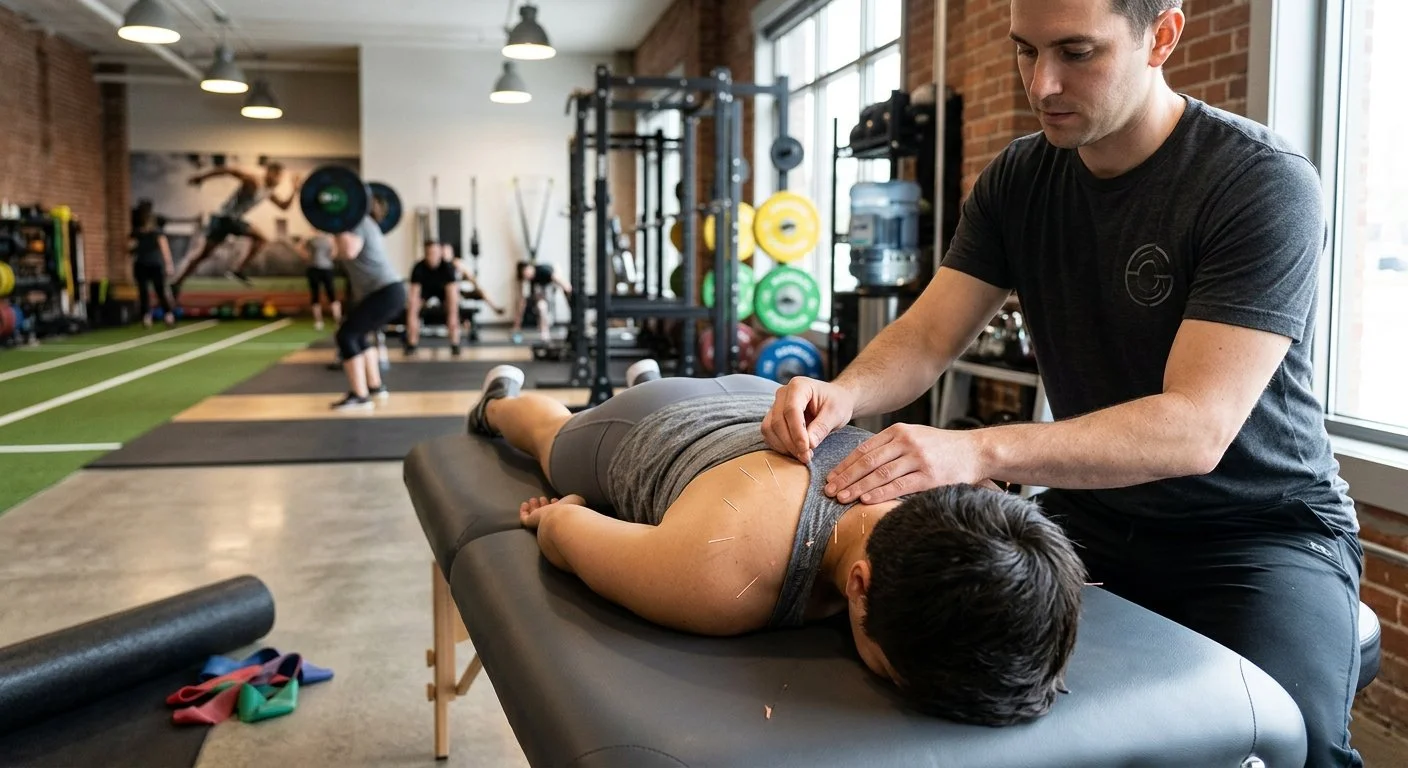
Trigger Point Dry Needling: Frequently Asked Questions
Understanding how dry needling fits into your training and recovery plan helps you feel confident and prepared for your session. Here are answers to the most common questions our clients ask.
1. Understanding the Experience
Is dry needling the same thing as acupuncture?
No. While both techniques use thin needles, Trigger Point Dry Needling is rooted in Western medical science, neuroanatomy, and biomechanics. It targets specific hyperirritable muscle knots (trigger points) to restore mechanical movement and relieve pain. Acupuncture, by contrast, is based on Traditional Chinese Medicine and focuses on balancing energy flow (Qi) along meridians.
Does dry needling hurt?
Most clients experience minimal discomfort upon needle entry because the needles are exceptionally thin. However, when the needle reaches a trigger point, you may feel a brief, mild ache or a deep cramping sensation accompanied by a Local Twitch Response (LTR). This involuntary twitch is a sign that the muscle knot is deactivating and resetting.
2. Safety & Side Effects
Is dry needling safe?
Yes. At our studio, dry needling is performed exclusively by licensed physical therapists who have completed advanced, accredited post-graduate certification in neuromuscular needling. We adhere strictly to sterile medical practices, using single-use, pre-packaged, sterile disposable needles.
What are the potential side effects?
Common side effects are temporary and mild:
Muscle Soreness: Feeling like you completed an intense workout in the treated area for 24 to 48 hours.
Minor Bruising: Small spots of localized bruising can occasionally occur near insertion points.
Temporary Fatigue: Feeling deeply relaxed or slightly tired immediately following a session as your nervous system recalibrates.
3. Post-Treatment & Performance Recommendations
How should I care for my body after a session?
To maximize treatment benefits and minimize post-session soreness:
Hydrate Well: Drink plenty of water throughout the day to support tissue recovery and flush out metabolic waste.
Apply Gentle Heat: Use a warm bath or heating pad on the treated area for 15–20 minutes to soothe temporary soreness.
Keep Moving: Perform light stretching, active mobility work, or easy walking to keep blood flowing through the relaxed muscle tissue.
Can I workout right after a dry needling session?
Same-Day Activity: Light-to-moderate physical activity, mobility work, and steady-state cardio are encouraged.
Heavy Load Training: We typically recommend waiting 24 hours before attempting maximum-effort weightlifting or intense high-impact training on the specific muscle groups treated. Your therapist will provide tailored guidance based on your specific training schedule.
**** The state of Georgia does require a doctor's medical order for trigger point dry needling.